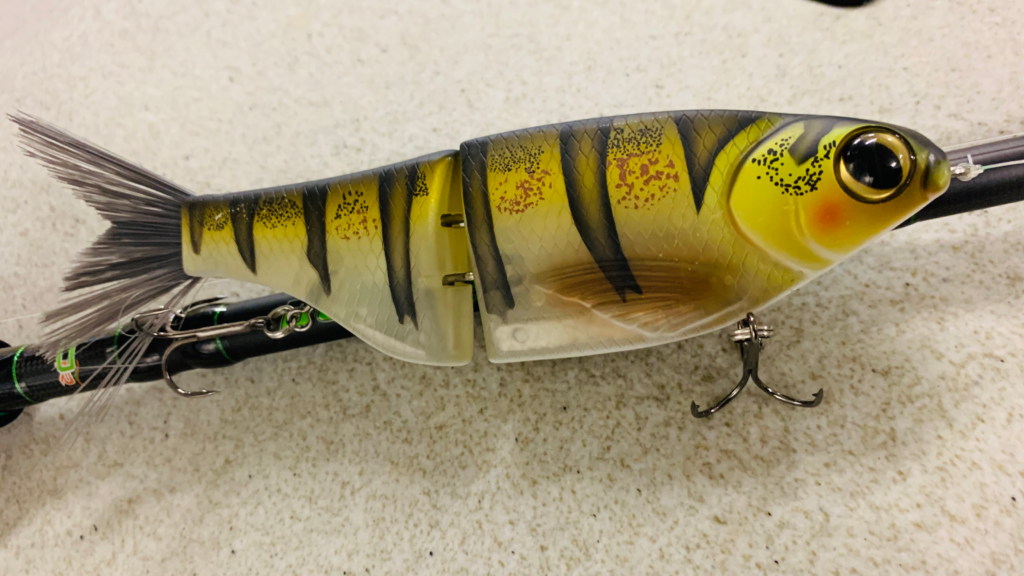
A glide bait is a large swimbait designed to sweep from side to side. Clear water, isolated cover and staging structure are strong starting situations, while retrieve speed, depth and slack determine how the bait behaves.
Short answer
A glide bait is a large swimbait designed to sweep side to side on a controlled retrieve. Its biggest advantage is drawing power: in clear water, bass may track a large bait from a surprising distance. The key variables are retrieve speed, depth, line slack, casting angle and what you do when a follower appears.
How glide baits create and convert opportunities
What makes a glide bait different?
Many hard glide baits use a jointed body that produces a broad S-shaped path. Soft glide-style baits can create a similar sweeping presentation but differ in buoyancy, hook arrangement and how sharply they can turn.
The category is broad: different baits vary in buoyancy, joint design, hook placement and turn radius, so retrieve behavior matters more than any one universal setup.
Where glide baits make the most sense
Strong starting situations:
- relatively clear water where fish can track the bait
- isolated cover such as docks, laydowns, boulders and grass edges
- points, breaks and staging structure where big bass can rise or move laterally to inspect a large prey item
- prespawn and cold/early-season windows when large bass may be feeding on substantial forage
- fisheries with large shad, herring, trout, kokanee or adult sunfish forage
Bassmaster examples repeatedly emphasize clear water and “drawing power.” For the visibility side of that equation, see Clear-Water Bass Fishing.
Three retrieves worth mastering
1. Steady S-glide
Medium or medium-fast retrieve. Use it to cover water and let the bait’s natural swimming path work.
2. Slow glide + pause
Useful in colder water or when fish follow without committing. Slower retrieve widens the sweep; a pause can let a suspending/slow-sinking bait hang or drift.
3. Chop / deadwalk
Rod and slack-line inputs make the bait turn sharply and stay near a target. Useful around isolated cover rather than on every cast.
The 180-degree turn
Michael Iaconelli describes intentionally snapping the bait and immediately feeding slack so it can turn back toward a following fish. Whether or not a bass interprets this exactly as an injured prey response, the maneuver changes direction abruptly and can turn a passive follow into a decision point.
Present this as a proven angling tactic from experienced anglers—not a scientifically tested behavioral mechanism.
Followers are information
A follower is not necessarily a failed cast. Note:
- where the fish appeared
- how deep it was
- which retrieve speed caused it to track
- whether an erratic move made it accelerate or leave
- whether another angle lets the fish encounter the bait differently
Repeated casts from different angles can matter, especially on isolated structure.
Boat positioning and retrieve angle
Avoid assuming “cast shallow and retrieve downhill” is always correct. Swimbaits tend to rise during retrieve, so an uphill/deep-to-shallow presentation can sometimes help maintain the desired relationship to structure. The best angle is the one that keeps the bait in the strike zone and presents it naturally to the fish.
Tackle
A large glide bait can be heavy and expensive. Match the rod’s lure rating to the actual bait weight. Heavy line is common, but line diameter and material influence sink rate, action and turning ability. Use hardware appropriate for the bait and routinely inspect split rings, hooks and knots.
There is no useful universal rod-and-line prescription: a 5-inch soft glide bait and a 10-inch hard bait place very different demands on tackle.
Clear water is an advantage and a challenge
Clear water lets a bass see the bait from farther away—but also gives it more time to inspect the bait, line and presentation. Long casts and clean approaches can help. Wind/light can change how closely fish inspect a large bait.
Sources
- Michael Iaconelli, “Don’t miss this glidebait window”: https://www.bassmaster.com/column/michael-iaconelli/dont-miss-this-glidebait-window/
- Bassmaster “Land of Giants: Early season slaunches”: https://www.bassmaster.com/how-to/news/early-season-slaunches/
- Bassmaster “Winter wonder-bites”: https://www.bassmaster.com/how-to/news/land-of-giants-winter-wonder-bites/
- Bassmaster “Spawning baits for highland lakes”: https://www.bassmaster.com/how-to/slideshow/spawning-baits-for-highland-lakes/
- Chris Zaldain on swimbait retrieve angle: https://www.bassmaster.com/how-to/news/swimbaits-and-the-drop-swim/