Largemouth bass can look unusually dark, yellow, pale, reddish or blotchy for very different reasons. Normal color change, rare pigment phenotypes, experimental gene edits and disease-associated lesions should not be collapsed into one “weird bass” category.
Bass color comes from more than one pigment
The existing 2025 gene-editing source follows melanophores, iridophores and xanthophores during largemouth-bass development.
Dark, pale or strongly patterned
May reflect light, background, physiology, stress or ordinary individual variation.
Are golden largemouth bass real?
A xanthic largemouth bass was documented in Florida in 1953, but “golden” appearance alone is not a genetic diagnosis.
Albino or hypopigmented
CRISPR disruption of a tyrosinase-related gene produced albino larvae in a 2025 largemouth-bass study.
Reddish / pink-toned bass
CRISPR disruption of csf1ra produced reddish fish; that does not prove the same cause for unrelated wild fish.
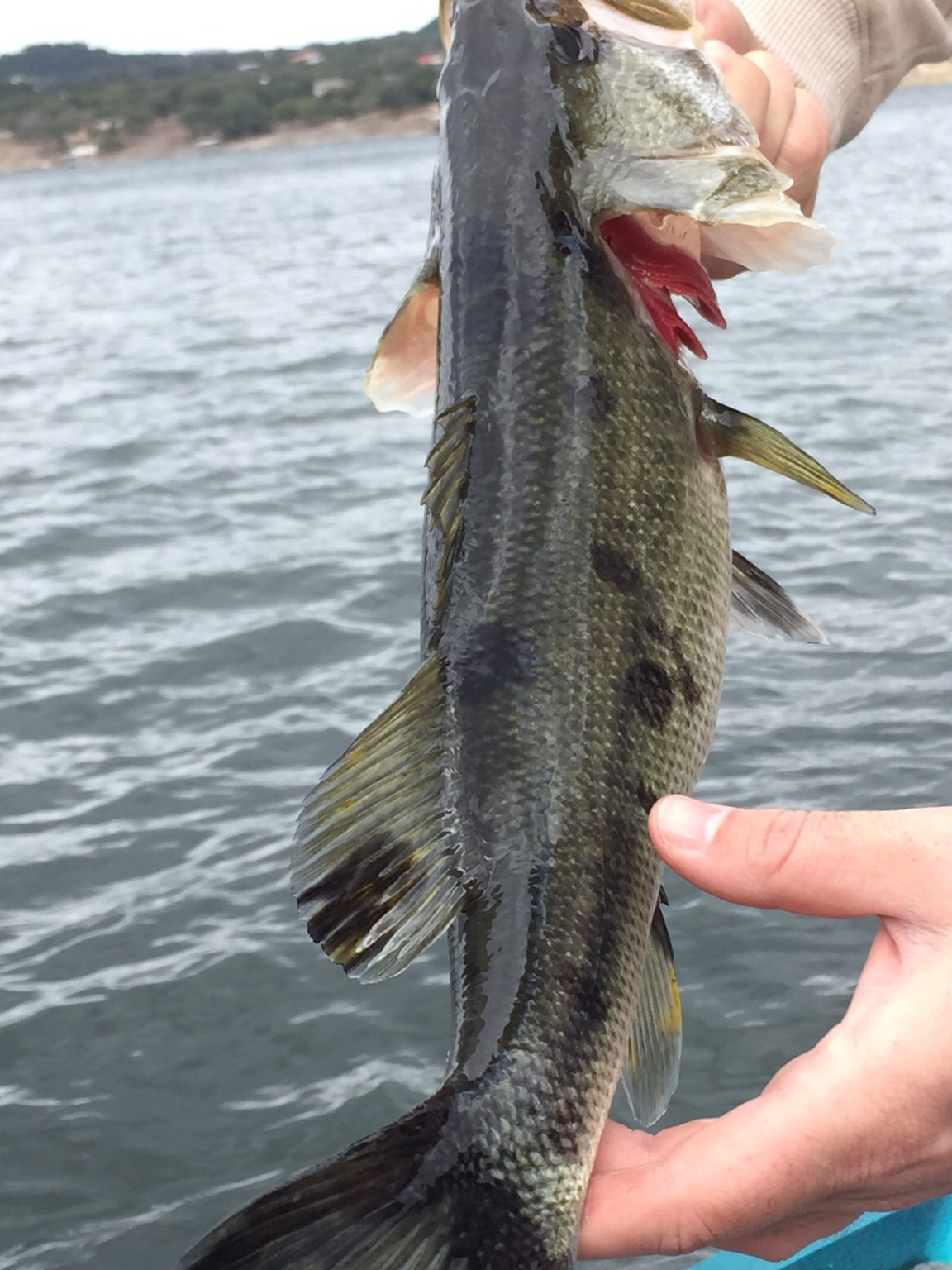
Blotchy black lesions
Characteristic BBS lesions are strongly associated with host-specific adomaviruses.
Describe first
When cause is unknown, write “unusually yellow bass” or “bass with irregular dark blotches,” then explain the evidence.
What to document if you catch an unusual bass
- Photograph both sides in natural light.
- Record waterbody, date, length and weight.
- Photograph eyes, fins and lesions closely.
- Avoid inventing a genetic or disease diagnosis.
- If the fish has lesions or seems unhealthy, local fisheries staff may value the observation.