Kayak Bass Fishing Gear Guide: What to Carry and What to Skip
A useful kayak setup is not the one with the most accessories. Start with required safety equipment and boat control, then add fishing gear only when it solves a specific problem without cluttering the deck.
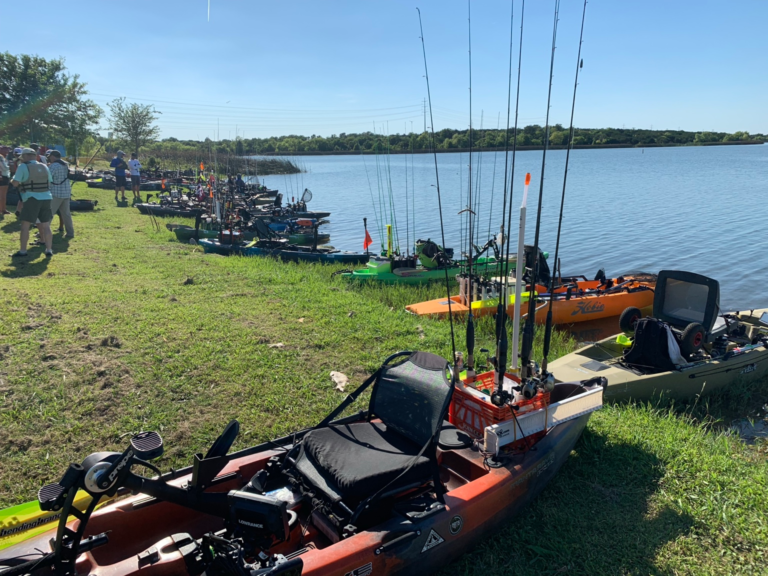
The practical setup
Wear or carry the legally required, properly fitted PFD for your water and activity; keep required signalling and lighting equipment aboard; then prioritize pliers, a simple tackle system, a measuring board when your fishing format needs one, and only the accessories you can reach without turning the deck into an obstacle course.
Safety gear comes before affiliate gear
Boating requirements vary by jurisdiction. In Texas, manually propelled paddlecraft must have a U.S. Coast Guard-approved wearable PFD for each person aboard. TPWD also lists signalling and lighting requirements that can apply depending on operating conditions, vessel and location. Children under 13 have additional wear requirements while underway.
This page intentionally does not name a single “best” life jacket. A PFD needs to fit the person, be approved for the activity and be used according to its label. Check the rules where you launch rather than assuming a shopping list is a safety checklist.
1. Pliers that can stay tethered to the kayak
Hook removal and line cutting happen in a confined space where a dropped tool can disappear instantly. Kayak pliers should be easy to reach with one hand and secured when practical.
KastKing Cutthroat 7-inch pliers
A current example from the Bass Facts affiliate inventory. The useful kayak features are a working cutter and the ability to tether the tool—not the brand name by itself.
Amazon affiliate link
2. A headlamp for launches and late returns
A headlamp is useful before sunrise, after sunset and any time you need both hands free for rigging. It should complement—not replace—the navigation or all-around lighting required for the craft and conditions.
Foxelli LED headlamp
The old Bass Fishing Facts affiliate listing remains part of the current Bass Facts gear inventory. Keep it accessible rather than buried in a crate.
Amazon affiliate link
3. A measuring board only if length matters
Length-based catch-photo-release tournaments make a rigid board essential. Recreational anglers who do not track length may not need one at all. Tournament anglers should confirm the current approved-board list before buying.
Hobie Hawg Trough
A familiar kayak-fishing measuring board. Do not assume any individual board is currently approved for a specific event; tournament rules change.
Amazon affiliate link
4. Storage that keeps the deck clear
A kayak has less forgiving floor space than a bass boat. A tackle system should keep hooks, boxes and soft plastics contained while leaving the footwell, pedal path and fish-landing area usable.
Plano Angled Tackle System
This portable system is one example. Whether it belongs on a particular kayak depends on available deck space and how the crate or box can be secured.
Amazon affiliate link
5. A scale if you actually record weight
Many kayak tournaments score by length rather than weight. For personal fishing logs, however, a compact digital scale can give you an actual weight instead of an estimate. Have the scale ready before lifting the fish and keep handling time short.
Rapala Sportsman’s Digital Scale
A straightforward dedicated scale already used elsewhere in the Bass Facts gear section. Check its current listing for specifications and availability.
Amazon affiliate link
6. Polarized glasses are useful—but fit is personal
Polarized lenses reduce glare and can help an angler see shallow cover, vegetation edges and submerged obstacles. Fit and lens choice are personal enough that this category is better treated as an example than a universal recommendation.
Costa Blackfin polarized sunglasses
A current example from the Bass Facts affiliate inventory. Consider fit, lens color and budget before treating any one frame as the right choice.
Amazon affiliate link
What I would skip at first
- Too many rods. Start with a few setups that cover different jobs.
- Large tackle systems that consume the footwell or fish-landing space.
- Accessories mounted before you know where your paddle, pedals and casting motion need room.
- Electronics simply because other kayaks have them. Add technology when it solves a problem you actually encounter.
- Any accessory that is difficult to secure or reach safely while seated.
A compact pre-launch gear check
| Priority | Question |
|---|---|
| Required safety | Do I have the PFD, signalling and lighting equipment required for this water and time of day? |
| Weather | Have I checked wind, storms and the return route? |
| Deck | Can I move my feet, paddle/pedal and land a fish without stepping over loose gear? |
| Tools | Can I reach pliers/cutters without standing or twisting sharply? |
| Measurement | Do I actually need a board, scale or both for this trip? |
| Tackle | Am I carrying what I expect to fish, rather than the whole garage? |
Safety references
Texas is used as a concrete example because Bass Facts is based in Texas; laws differ elsewhere. Verify the rules for the jurisdiction and waterbody where you operate.