ShareLunker is more than a trophy list. It is an angler-recognition system, a long-running archive, a selective-breeding program and—in confirmed cases—a source of individual-fish history.
Bass Facts EditorialReviewed September 2026
The short answer
The Texas ShareLunker program began in 1986. In its current form, it combines year-round trophy recognition, a public catch archive, optional DNA submissions and a January–March Legacy breeding program for 13-pound-plus largemouth bass.
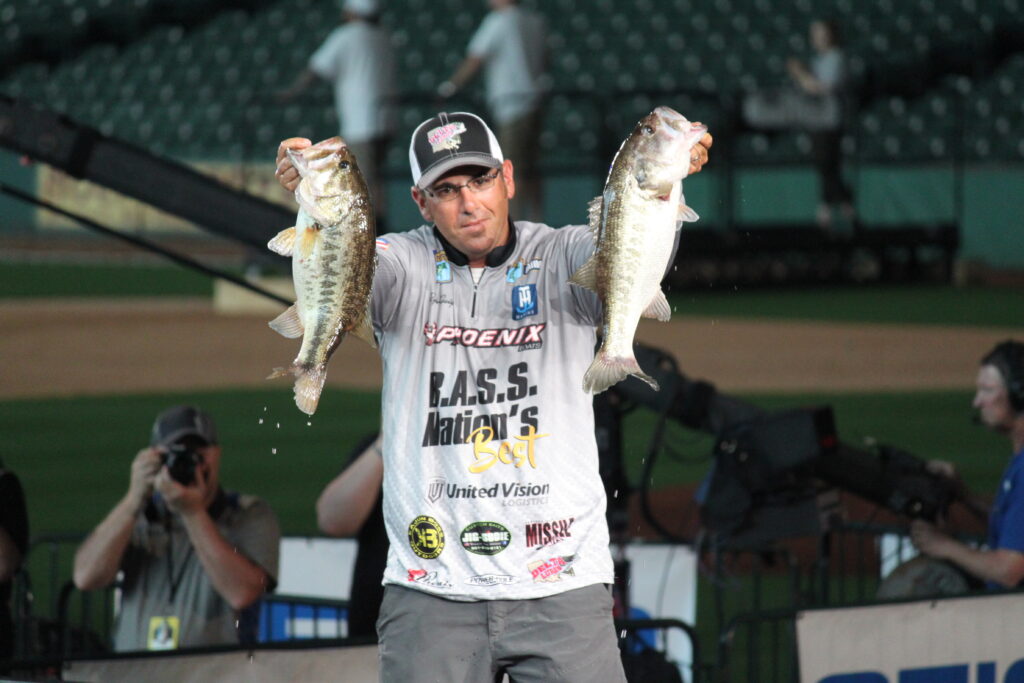
Two largemouth bass at the 2017 Bassmaster Classic on Lake Conroe, Texas. Original Bass Facts photograph.
The current ShareLunker classes
Bass Pro Shops Lunker
At least 8 pounds or 24 inches. The broad year-round participation level.
Strike King Elite
10 pounds or more. Double-digit bass receive separate recognition.
Lew’s Legend
13 pounds or more outside the Legacy collection window.
Legacy
13+ pounds caught Jan. 1–Mar. 31 and loaned to TPWD for selective breeding.
Historical caution:
sponsor names, eligibility rules and class structures have changed over four decades. Historical records should retain the program context that applied when the catch was submitted rather than being forced into 2026 categories.
From Ethel to the 40th season
TPWD traces the program’s beginning to Mark Stevenson’s 17.67-pound Lake Fork bass on Nov. 26, 1986. The fish later known as Ethel became the first ShareLunker and one of the program’s defining historical fish.
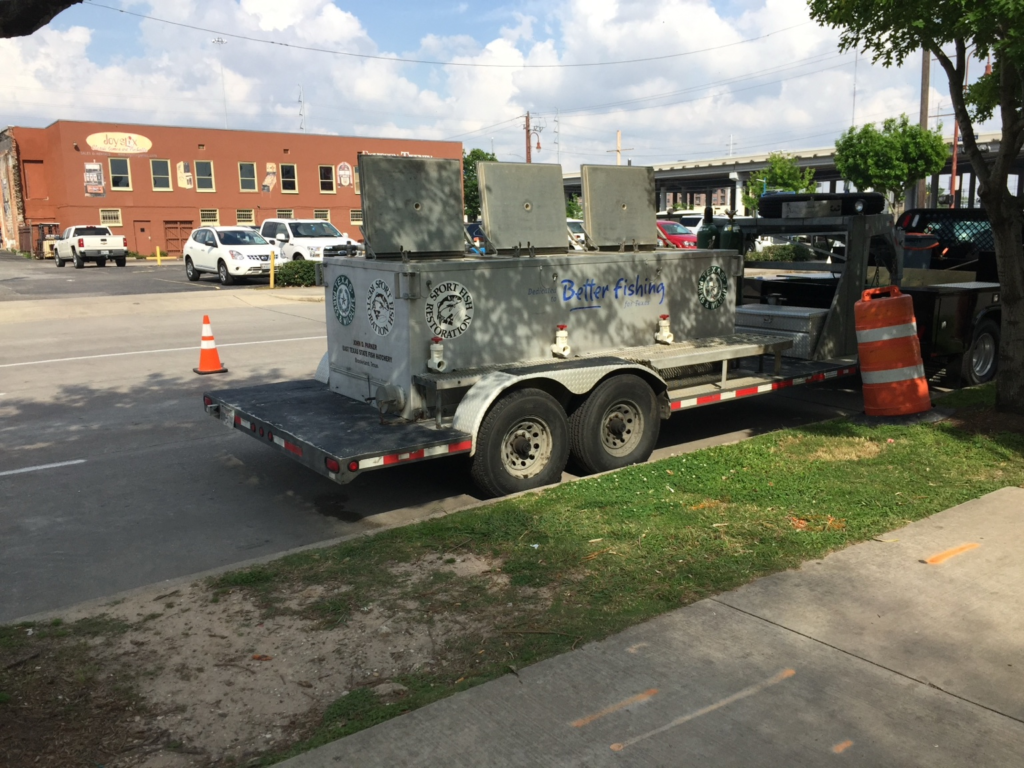
Original Bass Facts timeline built from TPWD program history and participation data.Texas fisheries-management equipment used to move and handle fish. Original Bass Facts photograph.
Why anglers are part of the science
The modern program asks anglers to submit catch information and optionally provide scale samples for DNA analysis. TPWD can use those data to study genetics, identify offspring of known broodfish and confirm recaptures of previously documented giant bass.
That is what makes ShareLunker more useful than a trophy gallery. It is simultaneously a recognition program, a long-running archive of catch events and—in a smaller subset of records—a way to follow the history of individual fish.
1,071qualifying entries reported for 2025
469anglers in the 2025 program
93public waterbodies represented in 2025
201DNA samples submitted in 2025
TPWD program reporting lists 714 Lunker, 335 Elite, 14 Legacy and eight Legend entries in 2025. During the 2026 Legacy collection season, 18 Legacy fish came from 10 public lakes; O.H. Ivie produced five and reached 63 Legacy-class fish since the 2020 season.
A ShareLunker entry is a catch event—not automatically a unique fish
This distinction is central to the Texas records database: Top-50 rows and ShareLunker rows are catch records; a Bass Facts “individual fish” entity exists only when TPWD confirms that multiple catches were the same fish.
The official archive exposes Catch ID, class, date, angler, hometown, weight, length, waterbody and photo fields. Bass Facts preserves each official catch record as its own event. A second layer connects multiple events to one fish only when TPWD genetics or recapture reporting supports that relationship.