Bass Fishing Technology Timeline: From Portable Sonar to LiveScope
How anglers went from reading depth and shoreline landmarks to saving offshore positions, scanning structure and watching fish move in real time.
Bass Facts Editorial • Reviewed September 2026
The short answer
Modern bass fishing changed in stages: portable sonar made depth and bottom readable, GPS made offshore locations repeatable, side imaging widened the search area, and live sonar made fish movement and lure interaction visible in real time.
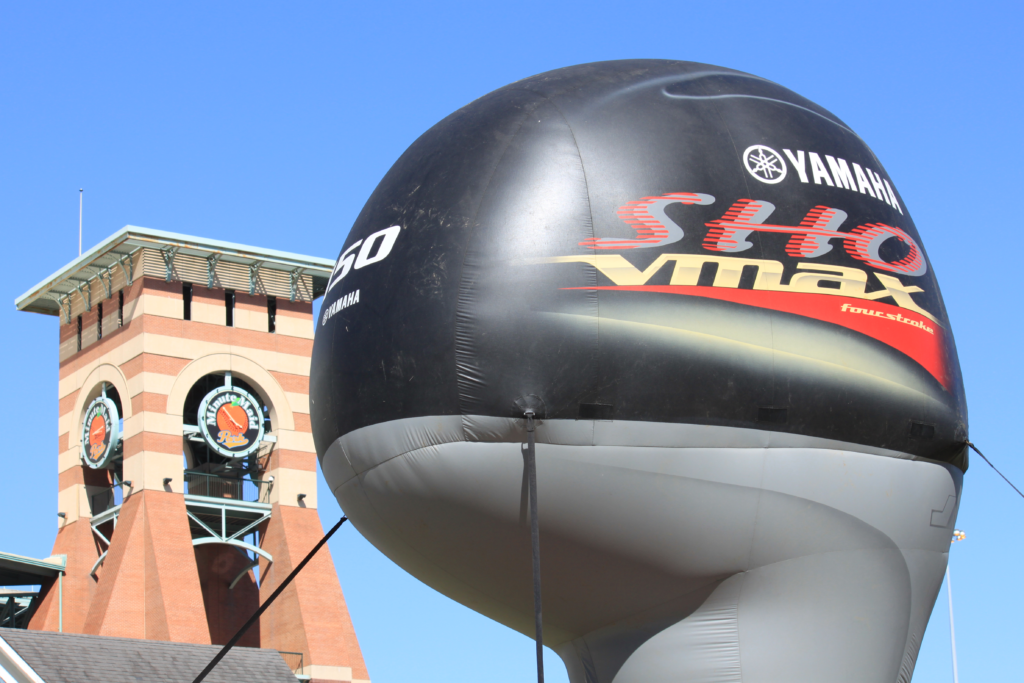
This timeline includes milestones supported by manufacturer histories, contemporary reporting and established reference sources; dates without adequate support are left out.Modern bass-boat technology on display at the 2017 Bassmaster Classic. Original Bass Facts photograph.
Bottom and depth → position → wider structure search → real-time fish movement. That is the clearest way to explain why each generation felt different.
1957–1959
Portable recreational sonar
The existing page cites Lowrance’s history of the FISH-LO-K-TOR “Little Green Box,” commercially launched in 1959.
1974
Graphite rods enter the bass-fishing timeline
Bassmaster’s technology history places Fenwick’s graphite-rod milestone in 1974.
1980
Salt impregnation changes soft plastics
The Gene Larew salt-impregnation process became a notable manufacturing milestone.
Mid-1990s
Senko / stickworm emerges
The exact development year remains deliberately expressed as a range because credible published accounts differ.
1990s–2000s
GPS makes offshore fishing repeatable
Saved coordinates reduce reliance on shoreline triangulation and earlier navigation systems.
2005
Consumer Side Imaging
The existing page attributes the consumer milestone to Humminbird’s company history.
2015
Garmin Panoptix
Real-time phased-array forward/down views make the “live” element increasingly important.
2018
Panoptix LiveScope
High-resolution real-time scanning becomes one of the defining technologies of modern bass fishing.
2020s
Technology becomes a rules and culture question
The timeline can document what changed; tournament restrictions and debates belong in a separate rules/culture treatment rather than being smuggled into the historical description.
Technology changes skills rather than eliminating them
Reading a flasher, triangulating a shoreline, interpreting side-imaging shadows and aiming a live-sonar beam are different forms of information processing. Each technology changes what an angler can observe and which skills matter most; that history does not require either defending or attacking modern electronics.
Dating rule:
“invented,” “introduced,” “first consumer product” and “widely adopted” are different claims. Manufacturer histories can support product-launch dates; they should not automatically be repeated as universal “first ever” claims.