For a first night trip, choose a place you already know in daylight, simplify the tackle and plan the return before making the first cast. Darkness changes how you fish and navigate; it does not supply a universal feeding schedule.
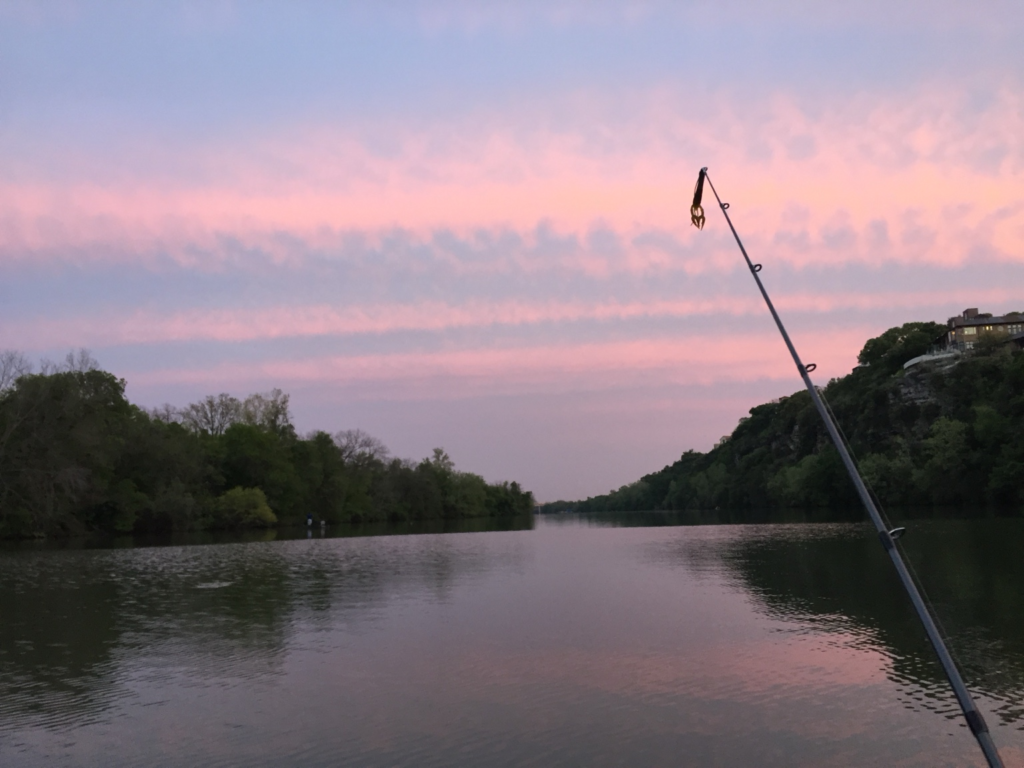
What supports fishing after dark?
TPWD lists summer night fishing as a productive option at Lake Fork. That is local fishing guidance, not proof that all bass feed more at night. [1]
A Texas Parks & Wildlife Magazine feature describes experienced anglers using slow spinnerbaits, worms and other presentations after dark. Its accounts include dark finishes and adjustments around ambient light. Those are reported angler practices; they are not controlled comparisons establishing a single best bait or color. [2]
Make the trip easier before sunset
Our suggested first trip has a small fishing area and an uncomplicated return. Locate the access point, bank hazards and likely casting lanes in daylight. Confirm that the access remains open for your planned return. Tell someone your plan and arrange a way to communicate if it changes.
Rig a few rods before you leave. Keep the landing tool, pliers and light in fixed places, and put unused tackle away. If boating, check the current equipment and lighting requirements for your vessel and water; reducing glare is never a reason to turn off required navigation lights. Wear an appropriate life jacket and avoid unfamiliar routes in darkness.
Work a route you can repeat
| Situation | Try | Pay attention to |
|---|---|---|
| A known grass edge | A moving bait at a controllable depth | Where the retrieve contacts vegetation |
| A familiar bottom feature | A jig or soft plastic with a deliberate retrieve | Changes in tension and repeatable contact |
| An open surface lane | A topwater with space around the cast | Partners, hooks and a safe landing position |
| A lighted area | Compare the illuminated edge with nearby darker water | Observed baitfish and strikes rather than the light alone |
Change one part of the presentation at a time. If a cast repeatedly catches grass, a different depth or route may tell you more than cycling through colors. Keep a record of where the bite happened so you can repeat the useful part of the retrieve.
Keep color claims modest
Experienced anglers’ preferences are useful starting points. They do not make black mandatory, or prove that a particular finish is invisible after sunset. Our color-vision reference explains why discrimination, visibility and willingness to strike are separate questions.
Likewise, do not treat one good full-moon trip as a moon-phase rule. Record fishing effort, location, weather and presentation alongside the result. Keep the quiet trips in your notes too.
Finish with a simple landing and return
Before casting, decide where you will bring a hooked fish and where your partner will stand. Keep loose hooks clear of that space. Have the camera ready if you want a photograph, but skip the photo when it makes handling awkward. See better bass photos and catch, photo and release.
Warm-weather night fishing is still warm-weather fishing. In ponds, nighttime oxygen use can matter even when the air feels cooler; our pond guide explains that distinction. Leave enough time and battery capacity for the return, and end early if conditions exceed your plan.
Sources and scope
- TPWD — Fishing Lake Fork. Local seasonal guidance.
- Texas Parks & Wildlife Magazine — Night Bassin’ 101. Reported angler experience.
Checked September 8, 2026. The planning sequence and presentation table are Bass Facts editorial suggestions. This page is not a vessel-specific legal equipment checklist.