Very young largemouth bass begin on zooplankton and aquatic insects, then shift toward larger invertebrates and fish as they grow. Adult diets commonly include sunfish, shad, crayfish and other available prey—but the dominant food can change dramatically from one lake, season and bass size to another.
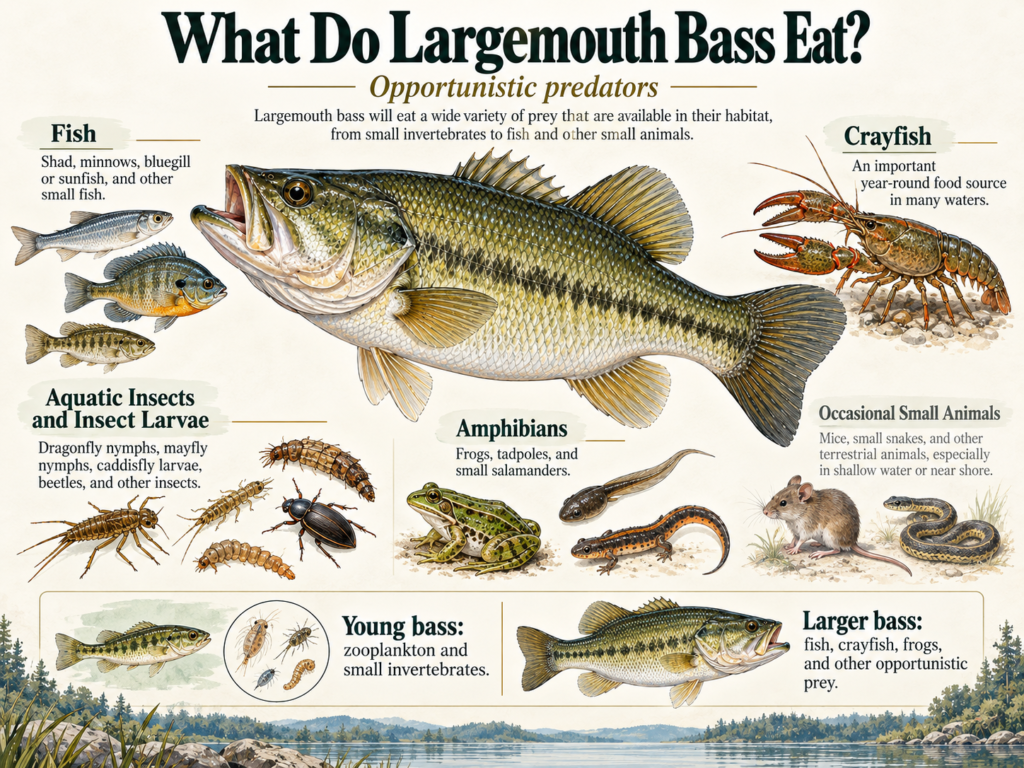
The diet changes as a bass grows
Fry
Zooplankton and insect larvae dominate while the fish is very small.
Juveniles
Aquatic insects remain important while small fish increasingly enter the diet.
Adults
Fish and large invertebrates—especially crayfish—can dominate, depending on what the system provides.
TPWD notes that largemouth bass become active predators at roughly two inches long. That does not mean every two-inch fish instantly switches to an all-fish diet; diet transitions are gradual and depend on whether appropriately sized prey are available.
Sunfish can be major prey
Bluegill and other centrarchids are frequent prey in many bass systems. In a DeGray Reservoir stomach-content study, sunfish were the principal identifiable fish prey, while another Iowa study found young-of-year centrarchids were especially important once bass shifted toward piscivory.
Shad are important—but not automatically the best forage everywhere
Threadfin and gizzard shad are iconic bass forage, especially in reservoirs. Older work found shad important to larger largemouth bass in systems where suitable sizes were available.
But a 2026 Kansas study of 3,500 largemouth bass from 12 small impoundments complicates the simple “more gizzard shad = better bass growth” story. Gizzard-shad occurrence in bass diets stayed below 10% and was largely restricted to October, even as shad abundance increased. Higher gizzard-shad abundance was also associated with reduced consumption of sunfish and crayfish.
The researchers suggested that dense gizzard-shad populations may sometimes lock energy into prey that become too large or otherwise unavailable to many bass. In those small impoundments, a steady littoral prey base could be more useful than a brief seasonal pulse of shad.
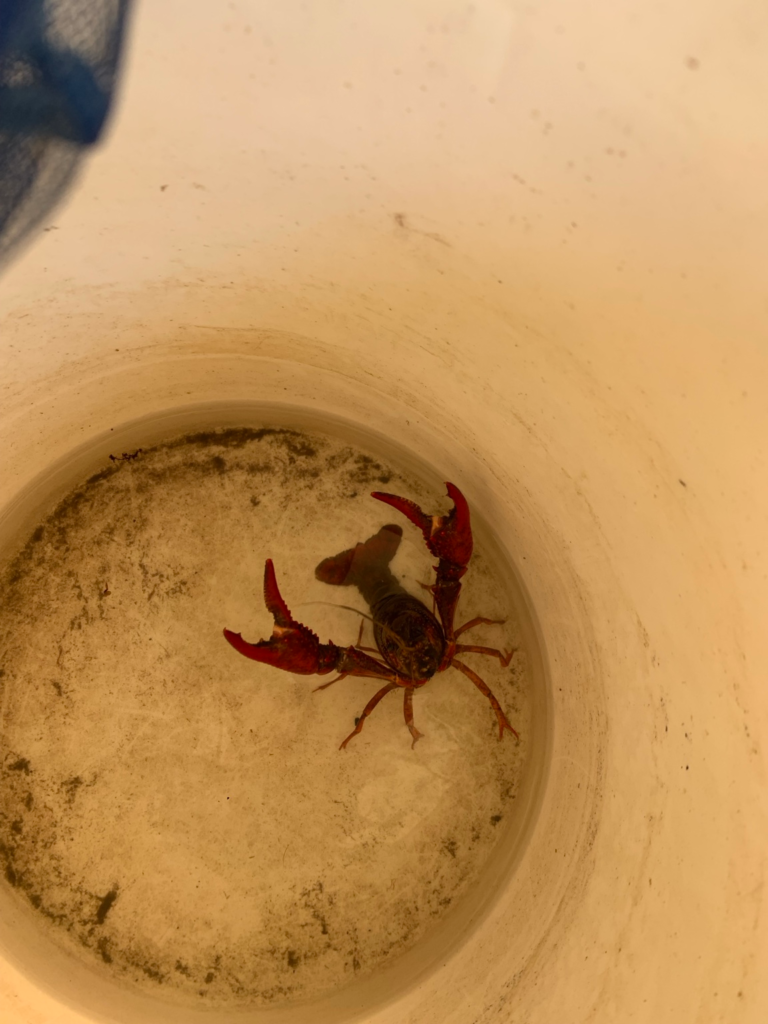
Crayfish can be a major part of the diet
Crayfish are not just a smallmouth-bass food. In one Arkansas reservoir study, crayfish made up nearly 38% of total largemouth-bass diet weight, and their importance increased among larger bass. Other reservoir studies have also found crayfish to be a substantial diet component.
Do largemouth bass eat frogs, mice, snakes and other strange prey?
They can. U.S. Fish & Wildlife Service lists frogs among normal adult prey and notes documented predation on terrestrial animals such as snakes and mice. But an unusual item found in one bass—or captured in a viral video—does not mean that prey is normally important to the population’s diet.
Will largemouth bass eat goldfish?
Yes, a largemouth bass can eat a suitably sized goldfish if the opportunity occurs. That does not make goldfish a normal or recommended forage species for bass waters. Largemouth bass are opportunistic predators, and the U.S. Geological Survey notes that goldfish have been cultured as forage for sport fishes as well as for the aquarium trade.
The more important management point is that goldfish are nonnative across most of North America. USGS identifies aquarium releases, bait releases and escapes as routes by which goldfish have become established in the wild. In other words, a bass may treat a small goldfish as prey, but anglers should not release aquarium goldfish into lakes or ponds to create forage.
Bass Facts treatment: the old “bass eating goldfish” item is best understood as an example of opportunistic predation, not evidence that goldfish are an especially important largemouth-bass food.
Do largemouth bass eat other largemouth bass?
Yes. Cannibalism occurs, particularly when juvenile bass are abundant and vulnerable. Studies of bass diets have documented largemouth bass among the prey categories consumed by larger largemouth bass.
Season matters
Prey communities change through the year. Young-of-year fish become available at certain times, crayfish activity shifts, and shad size distributions change. A classic Minnesota study found seasonal diet changes closely tied to growth; the fish did not gain weight substantially until suitably sized fish prey became available later in the growing season.
What this means for fishing—without pretending the study tested lures
Diet research can tell us which prey are actually being consumed in a system and how that changes with season and bass size. Translating that into lure selection is an angling inference, not a direct experimental result. A good forage match can be useful, but bass are flexible predators rather than machines programmed to eat one prey species.
Primary & authoritative sources
2026 study
TPWD
USFWS
Study
Study record