Zebra mussels can dramatically change a lake’s food web, water clarity and where energy moves through the ecosystem. Those changes can help some fish in some lakes and hurt others elsewhere—so there is no scientifically defensible universal rule that zebra mussels are “good” or “bad” for bass.
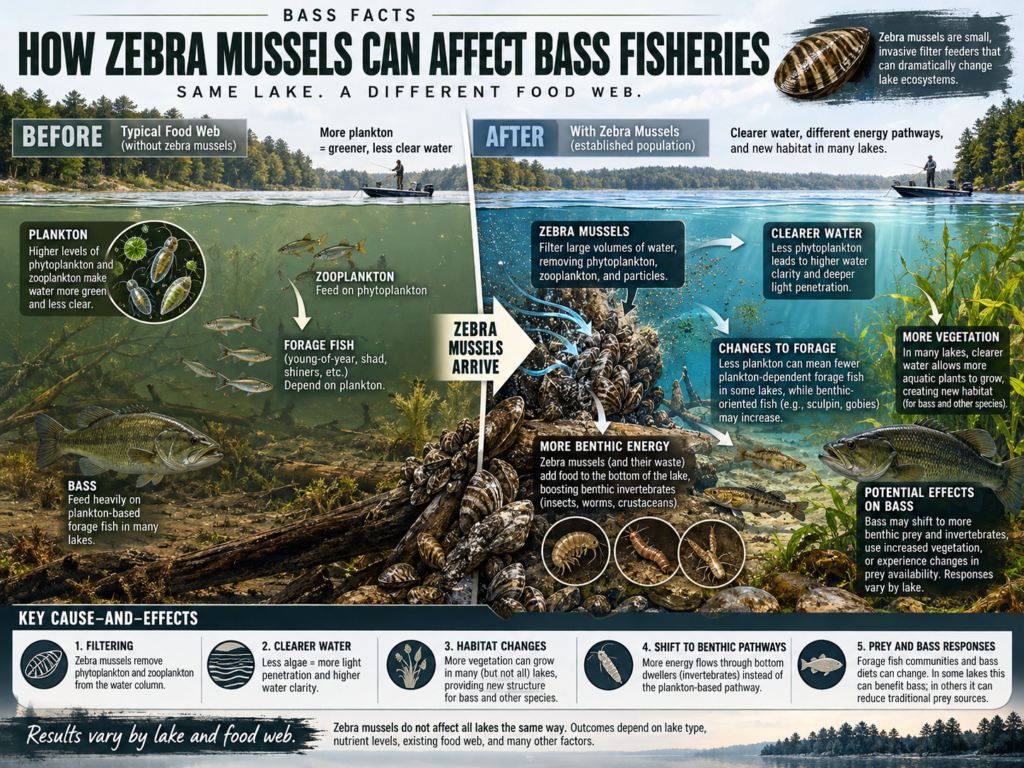
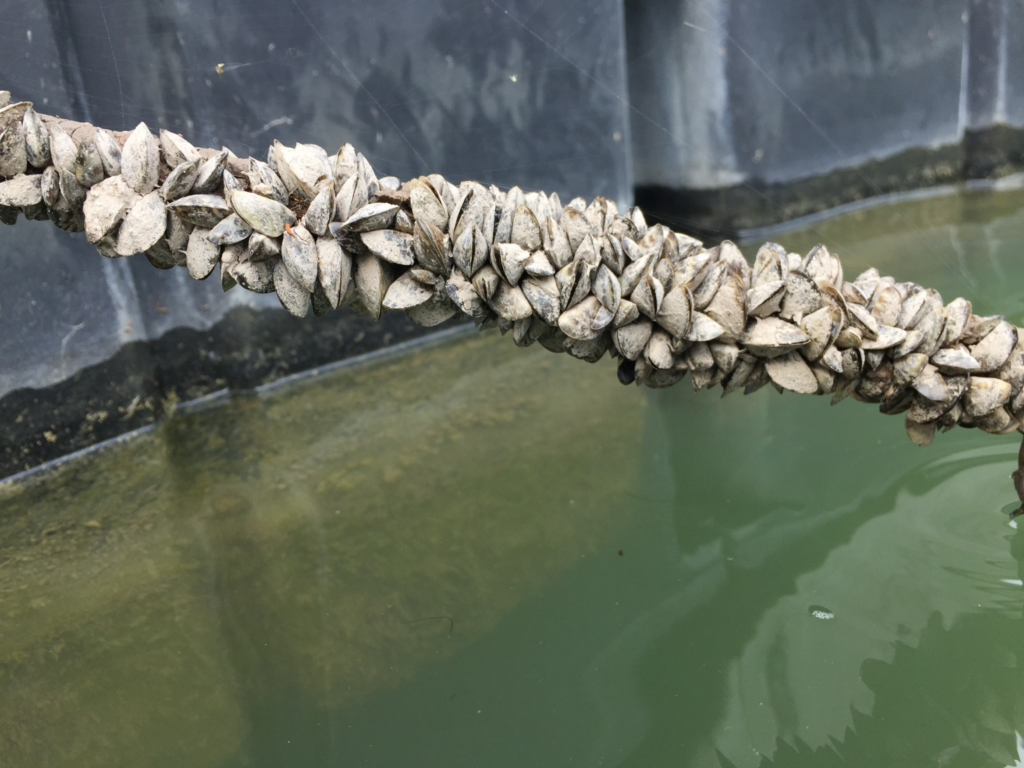
What zebra mussels actually change
Zebra mussels are powerful filter feeders. By removing suspended particles and plankton from the water column, dense populations can increase water clarity and redirect nutrients and energy toward the lake bottom.
That shift is often called a move from pelagic to benthic production: less energy stays suspended in open water while more becomes associated with bottom habitats, attached algae and organisms that feed near the substrate.
Why bass responses differ by lake
A bass fishery sits on top of an entire food web. If zebra mussels change zooplankton, forage-fish recruitment, crayfish production, aquatic vegetation or light penetration, predator fish can respond indirectly.
Potential benefit pathway
Clearer water and stronger benthic pathways can favor vegetation, crayfish and visually feeding predators under some conditions. Ecosystem models for Mille Lacs predicted a substantial smallmouth-bass increase when crayfish incorporated zebra mussels into the food pathway.
Potential harm pathway
Heavy filtering can reduce plankton-based productivity and juvenile forage availability. In the same Mille Lacs modeling work, major predator populations such as walleye were projected to decline under strong bottom-up food-web effects.
Largemouth bass are not smallmouth bass
One common mistake is to take a smallmouth response from a rocky northern lake and apply it automatically to largemouth bass in a vegetated reservoir. The two predators overlap in diet but use habitats differently, and local forage communities matter.
For largemouth bass, the most responsible Bass Facts framing is therefore indirect: zebra mussels can change visibility, habitat and prey pathways in ways that may alter largemouth behavior or production, but the direction and magnitude depend on the ecosystem.
Why clearer water matters to anglers
Even without a simple population-level effect, clearer water can change fishing conditions. Greater visibility can move vegetation deeper, expand visual detection distances and change how bass and prey use cover. Angling responses such as longer casts or stealthier approaches are practical inferences, not proof that zebra mussels themselves improve fishing. The practical visibility side is covered separately in Clear-Water Bass Fishing.