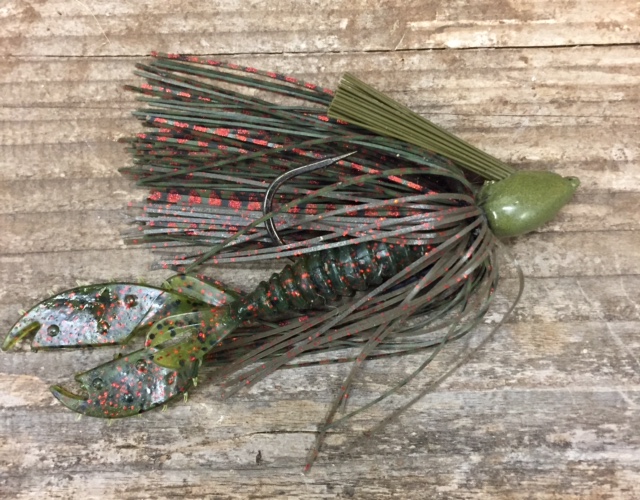
Choose the jig style for the cover and depth, add a trailer that gives the profile/action you want, make a controlled presentation, and pay attention to anything that feels different. A bass may crush a jig—or simply make it feel lighter, heavier or “wrong.”
The four jig styles that cover most situations
| Jig | Best use | Basic presentation |
|---|---|---|
| Flipping / casting jig | Wood, docks, brush, sparse vegetation and short targets | Pitch or cast to cover; let it fall, work it through the target, then move on or crawl it farther. |
| Football jig | Rock, gravel, shell, points, ledges and offshore structure | Drag, crawl or hop it while maintaining bottom awareness. |
| Swim jig | Grass, shallow cover and horizontal baitfish-oriented situations | Retrieve through the water column rather than treating it as a bottom lure. |
| Finesse jig | Clear water, cold water, pressured fish and smaller forage | Use a compact profile and controlled fall/crawl. |
Why head shape matters
A jig head is not just a weight. A football head resists rolling and transmits hard-bottom contact, but its width can hang in brush. A tapered flipping/structure head is designed to enter and exit wood or vegetation more cleanly. A swim-jig head tends to be narrow and streamlined for a horizontal retrieve.
That is why buying one “bass jig” and forcing it into every kind of cover creates unnecessary frustration.
Trailers change profile, fall and movement
A chunk-style or compact craw trailer adds bulk without necessarily adding extreme motion. Twin-tail and high-action craw trailers move more water. Paddle-tail trailers can turn a swim jig into a strong baitfish-shaped presentation.
Trailer choice also changes fall rate. More plastic surface area and active appendages can slow the fall; a compact trailer can let the same jig reach bottom faster.
Five basic retrieves
Move the jig slowly while keeping it in bottom contact. Excellent for rock and offshore structure.
Lift the jig off bottom, then let it fall again. Useful once active fish are located.
Put the jig tight to a target, let it fall naturally and work it in place before retrieving.
Keep the jig moving horizontally through grass, around cover or over submerged vegetation.
Snap a bottom jig sharply upward and let it fall back, creating a sudden fleeing/reaction presentation. It is a specialized option rather than the default retrieve.
The bite may not feel like a bite
A jig strike can be obvious, but many are not. If the lure suddenly feels mushy, stops falling early, moves sideways or becomes inexplicably light, reel down and be ready to set the hook. Bass often pick up a jig without producing a dramatic “tap.”
Match hook and tackle to the job
A heavy-wire flipping jig buried in thick cover usually pairs with stronger tackle than a compact finesse jig on open rock. The hook, line, rod power and cover should work as a system. Overpowering a small hook can open it; underpowering a stout heavy-cover hook can prevent penetration.
Color: start simple
There is little need to own dozens of nearly identical colors. Natural craw/bluegill tones such as green pumpkin/brown cover many clear-to-stained conditions, while black/blue is a standard high-contrast option in dirty water or low light. Swim jigs can also be matched toward shad or other baitfish.
Those are angling conventions, not immutable biological laws. Presentation, location and whether the bait is actually around fish matter more than debating two nearly identical skirt colors.
A good learning progression
- Learn a flipping/casting jig around visible wood or docks.
- Learn a football or dragging jig on rock where bottom contact is easy to feel.
- Add a swim jig when bass are relating to grass or shallow baitfish.
- Use a finesse jig when the larger profiles are too much.
Technique references
Bassmaster
Keith Combs
Jig selection
Trailer considerations