Read the bank, available cover and fish activity before choosing a lure. In warm weather, cooler-looking or deeper water is not automatically better habitat: oxygen matters too.
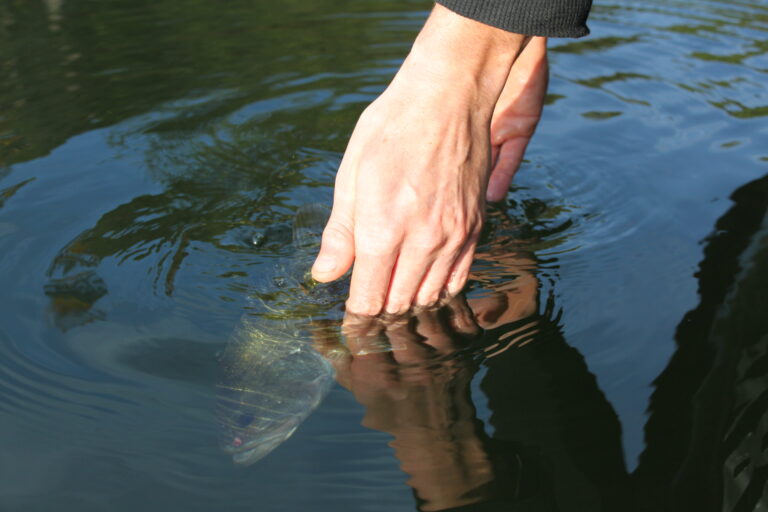
Make a first pass from the bank
Our suggested approach is to identify a handful of distinct targets: a vegetation edge, shaded bank, fallen tree, a change in bank slope, or an open lane beside cover. Choose a casting position that lets you retrieve along one of those features. Fish the accessible near edge before stepping right up to it.
A pond is an ecosystem, not simply a smaller casting area. TPWD’s aquatic-science material describes how plants provide habitat and support food webs, while temperature and dissolved oxygen can change quickly in shallow waters. [1] For an angler, that is a reason to observe conditions on arrival rather than assuming yesterday’s best spot will hold fish today.
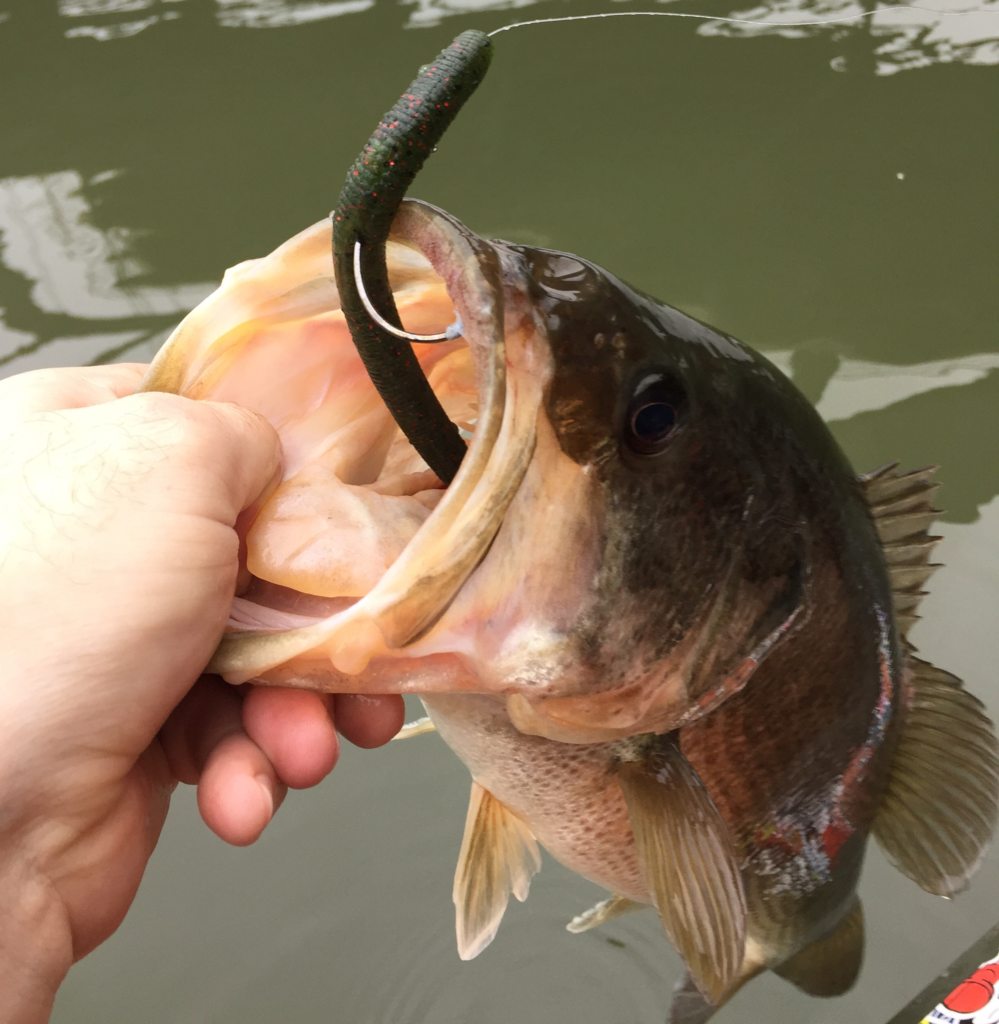
Choose a presentation for the route
| Available route | Starting option | What to watch |
|---|---|---|
| Open water beside vegetation | A swim jig or other moving bait that clears the cover | Following fish, strikes at an edge, or repeated fouling |
| A defined piece of wood or a pocket | A soft plastic or jig placed close to the target | Whether the bait reaches the intended depth and stays fishable |
| A clean surface lane | A topwater presentation with room for a retrieve | Missed strikes and whether a slower follow-up helps |
| A steep, accessible bank | A controlled sinking presentation | Depth changes and the point where bites occur |
These are Bass Facts fishing suggestions. Adjust them to the actual cover and tackle you can use safely. Carrying fewer presentations that cover different routes makes it easier to learn from a bite than changing every part of the setup after each cast.
Why “go deeper” can fail
In some ponds, temperature layers form during calm, hot weather. Mississippi State Extension explains that deeper water can become isolated from surface oxygen supplies; later mixing may reduce oxygen throughout the pond. Several cloudy days, dense blooms and dying vegetation can also contribute to oxygen problems. [2]
TPWD explains the daily side of the same problem: photosynthesis adds oxygen in daylight, then stops at night while oxygen use continues. [1] Consequently, dawn may offer comfortable air temperatures for the angler without guaranteeing high dissolved oxygen for the fish.
Fish gathering at the surface and appearing to gasp, particularly around sunrise, can signal low oxygen. [2] Stop fishing if fish appear distressed and tell the pond owner. A feeding problem and a water-quality problem call for different responses.
Learn from catches over several trips
Record the area fished, effort, lure, approximate conditions and sizes caught. Keep measured weights separate from estimates. A string of small catches can be useful information, but one afternoon cannot diagnose the pond’s population balance.
In a TPWD-published pond-management interview, fisheries consultant Bob Lusk emphasizes assessing the fish community and keeping length-and-weight catch records. He also describes harvest as a management tool whose use depends on pond goals. [3] Follow the owner’s management plan rather than deciding to remove or add fish based on a general online rule.
Before the next trip
Confirm permission and the owner’s expectations about access, guests, harvest and photographs. Leave gates and equipment as you found them. Bring a way to remove discarded line and tackle. Keep a simple release plan ready so landing a fish from the bank does not turn into a search for the camera or pliers.
Our fish-photography guide covers preparation; the release guide covers the handling sequence. For pond diagnosis, stocking or vegetation treatment, work with a qualified local fisheries professional.
Sources and scope
- TPWD / Texas Aquatic Science — Lakes and Ponds. Habitat, photosynthesis and daily oxygen changes.
- Mississippi State University Extension — Fish Kills. Stratification, oxygen depletion and warning signs.
- TPWD — Managing a Pond. Interview with Bob Lusk; fishery assessment and management goals.
The presentation table is editorial fishing guidance, not an experimental comparison of lure success. Sources checked September 8, 2026.