IGFA’s All-Tackle Length records recognize the longest eligible fish, not the heaviest. For largemouth bass, 48 cm is the current minimum eligible length for the category, while 65 cm / 25.6 in is the separate Trophy Fish Club threshold. Neither number should be mistaken for the standing world record.
Three numbers that are easy to confuse
48 cm — minimum eligible length
IGFA’s 2026 rules list largemouth bass under the combined Micropterus nigricans/salmoides record category with a 48 cm minimum eligible length for All-Tackle Length. That is a qualification threshold for the record program, not the record itself. Bass Facts applies the same field-by-field evidence principle described in our record-verification methodology.
65 cm / 25.6 in — Trophy Fish Club threshold
IGFA’s Trophy Fish Club recognizes a largemouth bass at 4.5 kg (10 lb) or 65 cm (25.6 in). Trophy Fish Club recognition is a separate achievement program. An angler does not set a world record simply by reaching 65 cm.
The standing All-Tackle Length record
The actual record is the longest approved fish in the relevant IGFA category. IGFA maintains a live World Records search, and the standing holder can change as new catches are approved. Bass Facts therefore treats the live IGFA database—not an old “recent records” PDF—as the authority for the current holder.
How an IGFA length record works
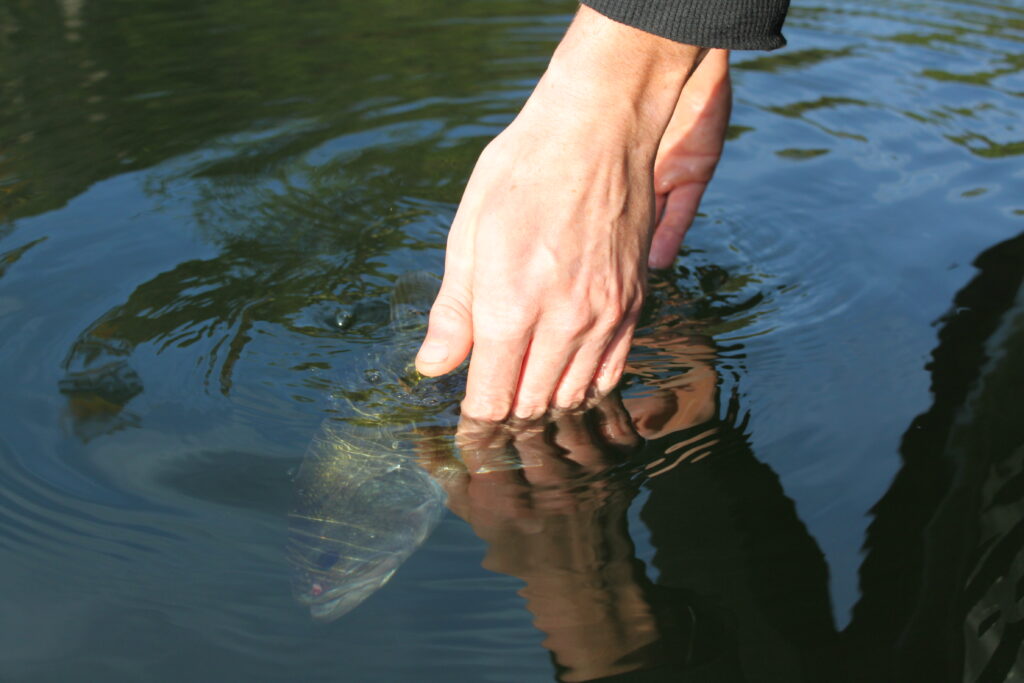
For conventional All-Tackle Length records, IGFA keeps the longest fish of each eligible species caught under its angling rules on line classes up to 60 kg (130 lb) and released alive.
- The fish must be measured on an official IGFA measuring device laid on a flat surface.
- The snout must touch the nose stop and be free of lures or lifting devices.
- Length is measured from the forward-most part of the snout to the rear center edge of the tail.
- Measurements are recorded in whole centimeters; a fish between centimeter marks is recorded at the lower mark.
- Photos must document the full fish on the measuring device, close-ups of the nose and tail positions, the angler with the fish, and the rod and reel.
- A fish that dies during documentation or does not swim away on its own after release is disqualified from the length record.
Why old “25.6-inch world record” articles became misleading
Older Bass Fishing Facts coverage treated 25.6 inches as a record-sized target. That number now appears prominently in IGFA’s Trophy Fish Club, while the modern length-record program has its own minimums, category rules and live record listings. IGFA has also expanded and revised its length categories over time, so a historical record announcement is not a safe substitute for the current database.
Largemouth and Florida bass are still combined by IGFA here
IGFA’s 2026 minimum-length table lists largemouth bass as Micropterus nigricans/salmoides, reflecting its current combined treatment of largemouth and Florida bass for this record category even as scientific taxonomy distinguishes them.