A surface lure that uses a rotating component to disturb the water during the retrieve. A steady-churning tail bait and a smaller prop lure worked with pauses can call for different presentations.
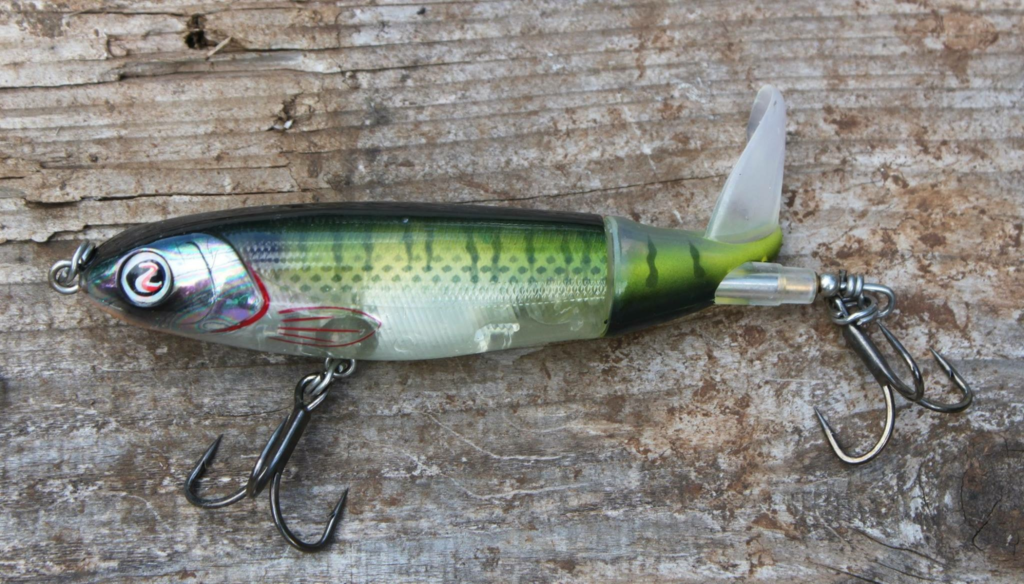
Two examples explain the difference
| Example | Manufacturer-described design | What to explore |
|---|---|---|
| River2Sea Whopper Plopper | A pliable rotating tail on a harness | The tail’s action across retrieve speeds |
| Rapala Skitter Prop | A floating balsa body with a stainless-steel propeller | Crank-and-pause or short snapping retrieves |
River2Sea credits Larry Dahlberg with the Whopper Plopper design and describes its musky-fishing background. Rapala describes the Skitter Prop’s propeller action and more than one retrieve style. These manufacturer accounts establish the design descriptions; their promotional language does not establish comparative catch rates. Sources
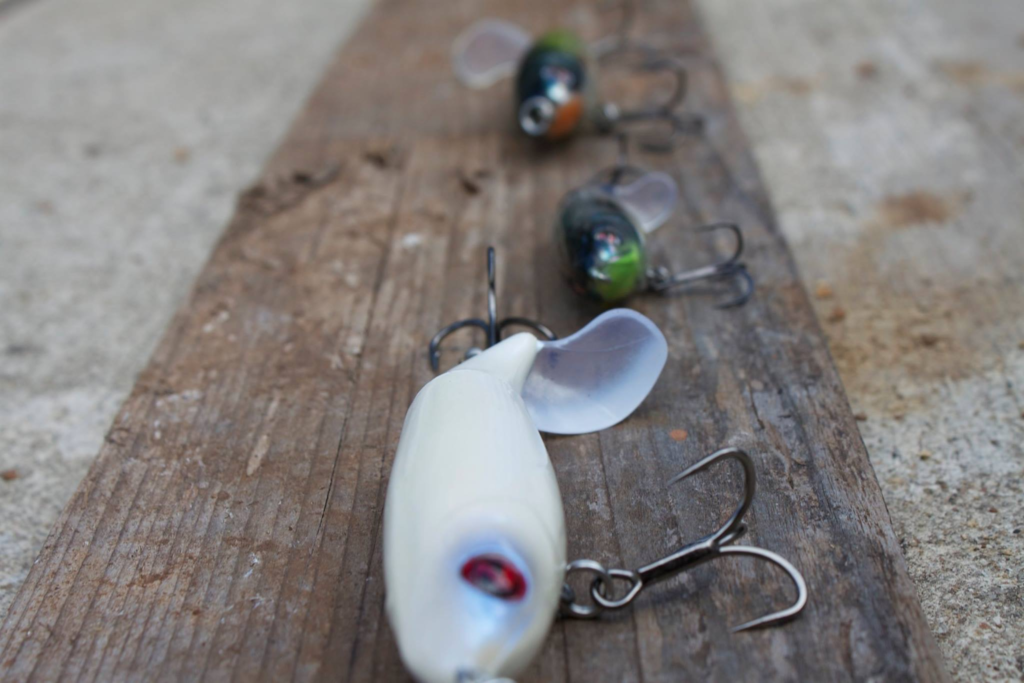
Where the Whopper Plopper fits
The Whopper Plopper is a recognizable example of a rotating-tail topwater, not a name for every prop bait. River2Sea’s specifications distinguish the 90 and 130 models, so do not assume that every size has identical weight or hardware. Check the actual model before choosing your rod and line. Sources
Our practical starting point is to retrieve the lure where you can see whether its rotating part is working freely. Establish a controlled retrieve before trying changes in speed. If the lure starts behaving differently, inspect it rather than assuming every change in sound or action is desirable.
Choose a clear surface route
Look for an open lane beside cover and enough space to finish the retrieve. Exposed hooks and rotating parts make weed fouling a practical consideration. If debris repeatedly interrupts the lure, a different route or presentation may be more useful than forcing another cast through the same material.
Cast with awareness of partners and nearby obstacles. Before fishing a tight space, decide where a hooked fish will be landed and where the unused rods and tackle will sit.
Compare motion and pauses
A useful editorial comparison is a steady retrieve versus a retrieve with deliberate pauses, using the same route when possible. Record where a fish responds: at the landing, beside cover, during movement or after a pause. A single strike is a clue to repeat the presentation, not proof of a permanent pattern.
Different floating prop designs may respond differently to a rod snap or a restart. Use the manufacturer’s demonstration for that lure and watch its actual behavior. Avoid transferring a retrieve mechanically from one model to another.
Keep the claims in proportion
Surface commotion, a memorable strike and a popular product do not establish that a bait is best in every season. We have not conducted a standardized comparison of these products and do not assign numerical ratings or fabricate first-hand experience.
For broader selection, use the bass-lure guide. For low-light preparation, see night bass fishing. If color choice is the question, start with the evidence on bass vision.
Sources and scope
- River2Sea — Whopper Plopper 130 & 90: design attribution, mechanism and model information.
- Rapala — Skitter Prop: construction and retrieve descriptions.
Checked September 8, 2026. Fishing suggestions are Bass Facts editorial guidance. No manufacturer photographs or older review images are reproduced.