Kayak Bass Fishing: Safety, Setup and Positioning
A fishing kayak can put an angler quietly into shallow cover and small access points—but the useful setup starts with safety, a clear deck and control of the boat.
Wear a properly fitted life jacket, carry the required signalling and lighting equipment for your water, check weather and wind, tell someone your plan, and rig only the gear you can reach without turning the deck into an obstacle course. Boat control matters more than adding another accessory.
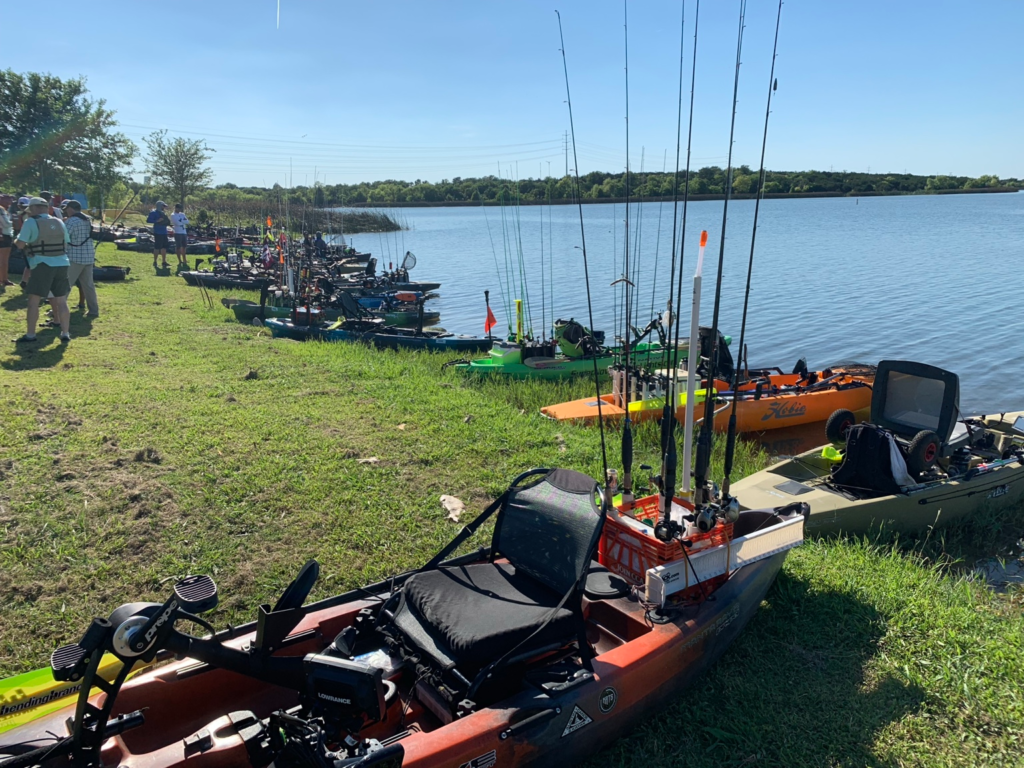
Safety equipment comes before fishing equipment
Paddlecraft rules vary by state, so check the law where you fish. Texas guidance is a useful example of the baseline: paddlecraft must carry a U.S. Coast Guard-approved wearable personal flotation device for each person, an efficient sound-signalling device such as a whistle, and a white light visible through 360 degrees when operating in reduced visibility or from sunset to sunrise.
TPWD also recommends filing a float plan, checking forecasts, carrying a map or navigation aid and matching the trip to your paddling skill. Those are not fishing-specific rules; they are basic risk controls for being on the water in a small craft.
In May 2026, Texas Game Wardens reported that paddling represented about 6% of reported boating incidents in Texas but 32% of fatalities. The same release emphasized life-jacket use, weather awareness and changing wind/current conditions.
Wind matters more in a kayak than it does from the ramp
A breeze that feels minor on shore can become the dominant force controlling a fishing kayak on open water. Before launching, check the forecast and look at the return route—not just the first shoreline you plan to fish. If the wind strengthens, the trip back can be much harder than the trip out.
For fishing, treat wind as part of boat positioning. A controlled drift can carry you down a productive bank, but the same wind can push you past cover faster than you can make an effective cast. Use your paddle, pedal drive or electric propulsion—where legal and appropriately equipped—to control casting distance and angle rather than fighting to hold one exact spot.
A clean deck is a fishing feature
Rod holders, electronics, crates, camera mounts, nets and tackle systems can all be useful. The problem is not the gear itself; it is gear placed where line, hooks, feet or paddle strokes constantly find it.
- Keep the area around your feet and primary paddle or pedal motion clear.
- Put pliers, cutters and the net where they can be reached without standing or twisting sharply.
- Secure items that would disappear if the kayak rolls.
- Store hooks and loose lures so they are not waiting for a hand, leg or PFD during a sudden movement.
- Keep a phone or emergency communication device protected but accessible.
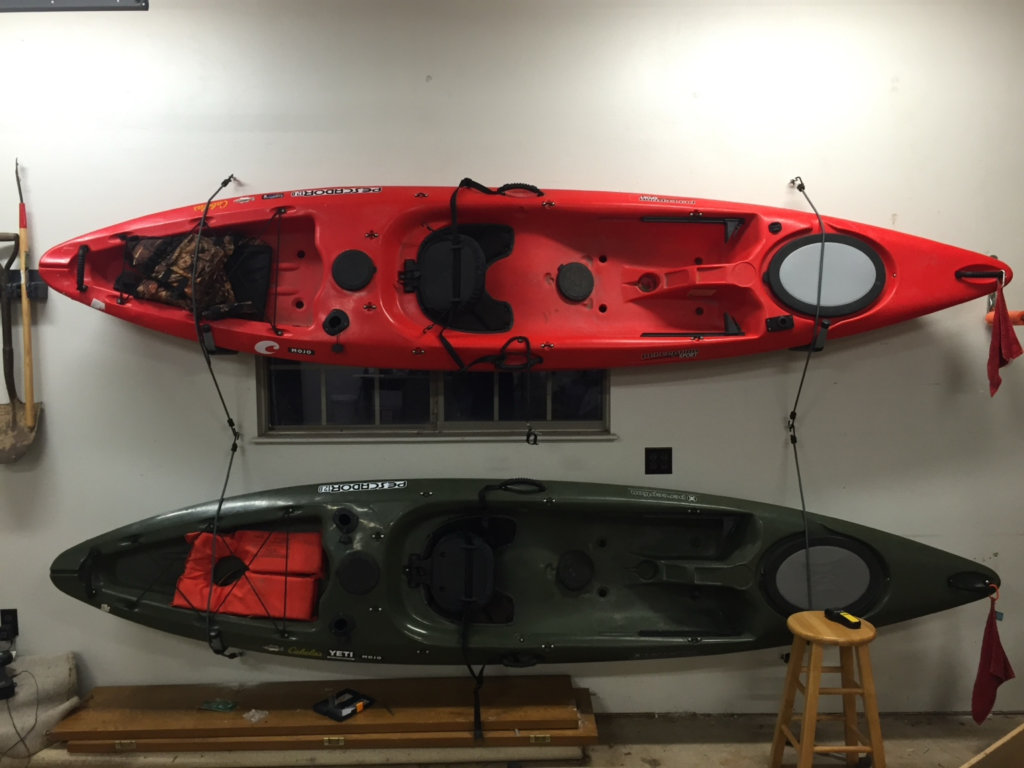
Carry enough rods to simplify decisions—not complicate movement
Multiple rods let an angler switch presentations quickly, but there is a practical limit in a small boat. Start with combinations that cover different parts of the water column or different cover rather than bringing a separate rod for every lure in the garage. The goal is to reduce retying without surrounding yourself with hooks and rod tips.
For a short trip, a compact set might cover a moving bait, a bottom-contact presentation and a finesse or follow-up option. That is editorial advice, not a universal formula; the right number depends on the kayak, water and angler.
Boat position changes the cast
From a kayak, the boat often drifts during the cast and retrieve. That means a presentation that looked perfect at the start can change angle halfway back. Watch the kayak as carefully as the lure: wind, current and your own casting motion are constantly moving the platform.
When fishing a shoreline, timber or vegetation edge, think one cast ahead. Position the kayak so the drift creates the next useful angle instead of carrying the boat directly onto the cover. In calm water, small paddle strokes can make large differences in distance without creating the noise and wake of a larger boat.
Standing is optional
Some fishing kayaks are designed for standing, but stability differs greatly among hulls and anglers. Follow the kayak manufacturer’s guidance and learn the boat in controlled water before standing to cast or land fish. A seated angler who can control the kayak confidently is in a better position than a standing angler who is constantly correcting balance.
Assume powerboats do not see you
TPWD specifically warns paddlers about shared waterways and motorized traffic. Avoid lingering in high-traffic channels when a safer route is available, make yourself visible, use required lighting in low visibility and do not assume another operator has noticed a low-profile kayak.
This matters especially at dawn, dusk and around points, bridges or marina entrances where sight lines and boat traffic can change quickly.
A practical pre-launch check
| Wear | Properly fitted, activity-appropriate life jacket |
|---|---|
| Carry | Required sound/light equipment, phone or communication device, water and basic first aid |
| Check | Weather, wind, water conditions, local rules and launch access |
| Tell | Someone where you are going and when you expect to return |
| Secure | Rods, electronics, crate and loose gear |
| Clear | Footwell, paddle/pedal path and landing area for fish |
The useful upgrade is control
Electronics, motors and elaborate tackle systems can make a fishing kayak more capable, but the core advantage remains simple: access to water with a small, maneuverable platform. Build the setup around safe operation and reliable boat control first. Add equipment when it solves a specific problem you actually have.
Sources and scope
- Texas Parks & Wildlife — Safe & Ethical Paddling
- Texas Parks & Wildlife — Required Safety Equipment
- Texas Parks & Wildlife — Life Jackets
- Texas Game Wardens, May 13, 2026 — National Water Safety Month release
- U.S. Coast Guard — Policy Letter 23-03 on state paddlecraft PFD-wear requirements
Sources checked September 17, 2026. Legal requirements differ by jurisdiction; anglers should verify the rules where they launch. Fishing-setup and positioning sections are Bass Facts editorial guidance.